János Bocz – István Harcsa
The characteristics of the interhousehold transactions
in
25–28 April 2001
Introduction
Aim of the lecture
Through
the use of two surveys this lecture will present the frequency of the
interhousehold transactions in
Data sources
The empirical data are based on two living conditions and time use
surveys, which were carried out by the Hungarian Statistical Office in 1986 and
2000. Both samples included more than 10 thousand households. The surveys
contain data about the households social and
demographic features and their daily activity, too. The first phase of the
research has been concluded recently and our data contained the result of this.
Main results
1. The proportion of the households
not taking part of the supporting system increased significantly, while in 1986
20 percent of the households, in 2000 already 31 percent neither give nor get any support to or
from other households.
2. At the same time the proportion
of those households who only gave support decreased and the proportion of the
households who only received any support increased.
3. This tendency – of course to
different extent – can be perceptible at the non-financial and financial
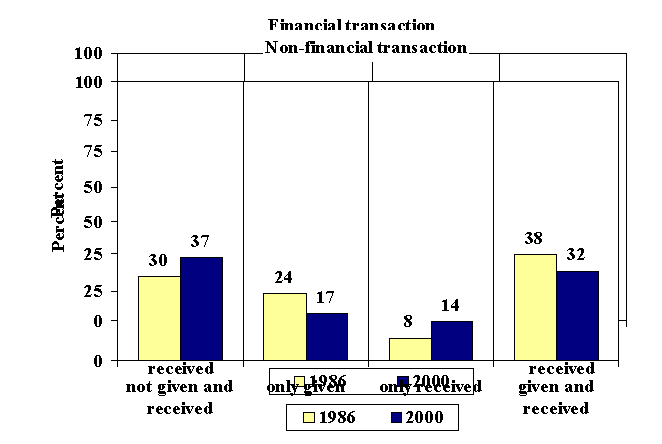
transaction both. Maybe seen in Figure 1 that the proportion
of the households who are excluded from the supporting system increased to a
high degree since 1986. In 2000 every second Hungarian household neither
get nor give any financial support for others and 37 percent of them did not
get and did not give any non-financial support too.
Before the explanation of the result we would like to give a full
description collectively and severally of the
changes in forms of the transaction and separately explore those demographic
and social characteristics which influenced the composition of the supporting
and supported households.
The financial and
non-financial transactions by types and forms (Table 1)
We found interesting results comparing the different forms of
transactions between 1986 and 2000. According to our results – as you can see
in Table 1 – the measurement of the participation in the
supporting system and the types of the transactions were remarkably
different from the forms of the transactions. For example the proportion of
those households who gave or received household work aggregately increased and
those who get or gave agricultural work has not changed. In the case of other
supports the proportion of the households who do not participate in the
supporting system significantly grew. We could realise great differences when
we examined the types of transactions separately also. The proportion of the
households who only gave any support – except the household work – decreased in
all forms of transactions, while the proportion of the households who only
received any support – except the child and adult care, and the construction
and renovation – increased. The measure of the so called mutual or reciprocal
supports – when the household gave and received some support at the same time –
except the household and agricultural work supports was also reduced. To sum it
up what has been said behind the average figures – as I mentioned earlier –
there are significant difference among the types and forms of the transactions.
The financial and
non-financial transactions in terms of demographic and social characteristics
The analysis of the demographic and social data of the households shows
interesting results as well. Further on we will inquire four variables through
we can demonstrate those characteristics which affected the participation of
the households in the supporting system. The first will be the residence of the
household, the second is the age of the head of the household, the third is the
household structure and the fourth is the household income level.
Residence
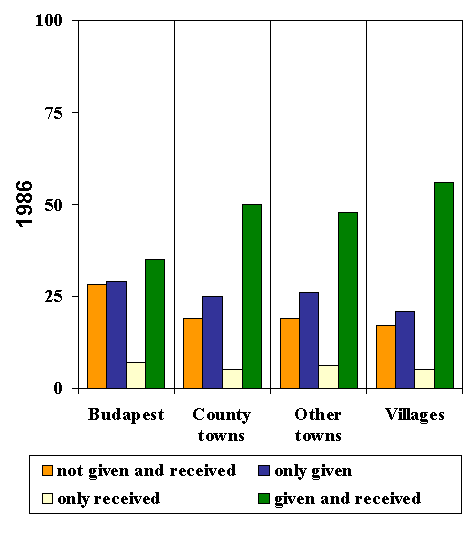
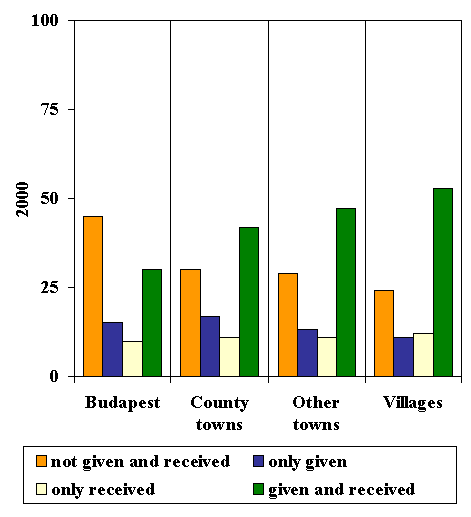
of the household (Figure 2)
According to our results – as you can see in Figure 2 – the proportion
of the households who remained outside the supporting system grew especially in
big towns. In 2000 in
Age of
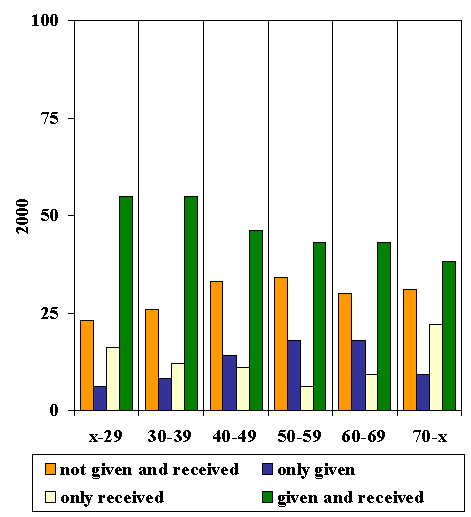
the head of the household (Figure 3)
Analysing
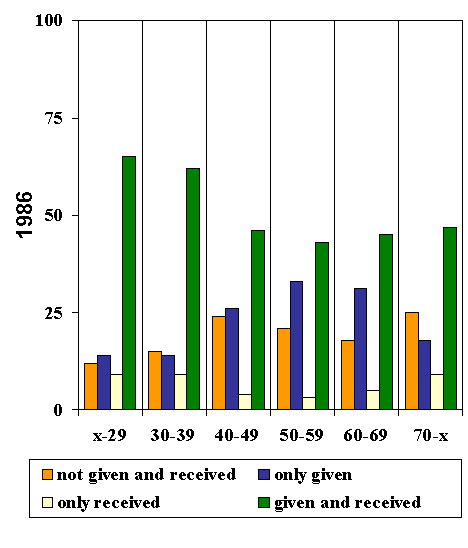
the age of the head of the household, we found that mainly the generations
below 40 were characterised by mutual supports. At the same time it was
remarkable that in 2000 in the case of the so called one-way supports – when
the household only give or only get support – the majority of those who only
gave were between 40-69, and that of those who only
got were less than 40 or older than 70 years. It means that – of course except
the oldest generations – mostly the younger generations got support from the
oldest ones – especially from their parents – and while earlier the
transactions were more or less reciprocal, nowadays it works fairly often only
in one-way.
Household
structure (Table 2)
According to our results – as you can see in Figure 2 – the structure of
the household significantly influenced the participation in the supporting
system. Mainly the married with children took part in the transactions. Those
families where there were not children under 18 were generally the supporters,
while the singles and the one parent with children households were in bigger
proportion among the supportees.
Household
income level (Figure 4)
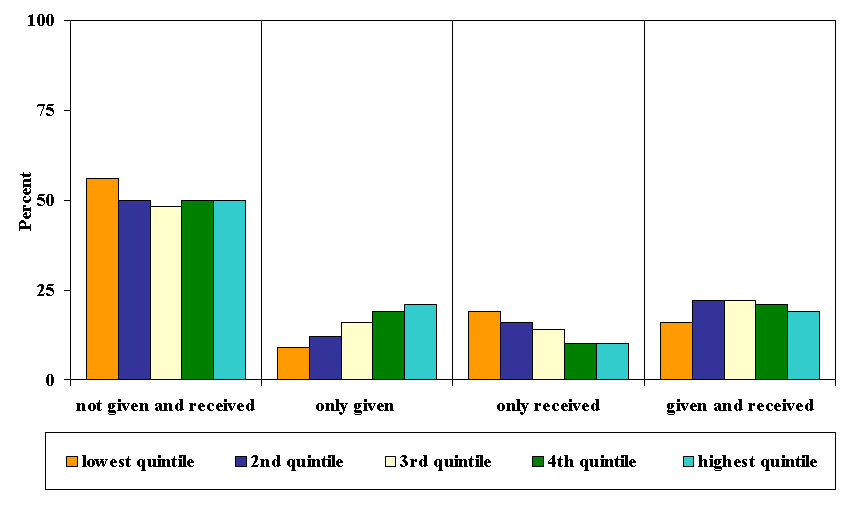
An interesting question for me whether there
exist any connection between the income level of the household and the
participation at the financial transactions. (This data only
valid for the financial transactions in 2000.) Maybe seen in Figure 4 we
can compare
those households with the others, who belong to the lowest quintile. They were
in a bit bigger proportion among those who were not in the supporting system, furthermore the mutual transactions were not
characteristic for them. A feature of the one-way transactions is that it
depended on the income level, the higher the quintile was, the bigger the
proportion of those who only gave, and the lower the quintile was, the bigger
the share of those who only got supports.
Interpretations
And at last I would like to summarise the main reasons which maybe
influenced the above mentioned results.
1. We think that our results were
determined by the relevant structural changes in the Hungarian property nexus
and the economic system. For example the unchanged high proportion of the given
and received agricultural work can be explained by the privatisation of the
agricultural lands, as a consequence of which the proportion of the small
holders grew significantly. The result of it was that the related
time-consuming work did not reduce, but increased. Probably the spreading
demand and supply of the service industries sector caused that the proportion
of the household who got or gave construction and repairing work reduced. Lots
of household now buy these services in the market, while previously it could
happen through mutual help.
2. The reduced proportion of the
financial transactions are probably strongly connected
with the worse income conditions of the Hungarian people. Because of the
decreasing real income and the process of differentiation among the households,
they can support others less often and to a less extent than earlier.
3. And at last but not least the
individualistic tendencies and the transformation of the previous family and
household network also had a serious influence on the alteration of the
transactions habits. We think that since the mid 80’s the Hungarian households
have not got so much friends and relatives to whom they could give or from whom
they could receive supports. On the other hand the strong family ties became
stronger and in 2000 the households mainly supported only close relatives or
the members of the family whom they were a really strong and frequent
connection with.
Finally I would like to say that the second phase of the research is
going on, and now we are processing our further database for example the time
use and the households network data which can add more relevant information to
our knowledge about the households transaction in
Definitions
Year of the surveys: 1986 and 2000.
Method of
the surveys: questionnaire.
Sample size: 1986 –> N = 10.150 household
2000 –> N = 10.827
household
Population:
Hungarian households.
Forms of transactions
Non-financial transactions: Given or received household work, child and adult care,
construction and renovation, repairing and maintaining, agricultural work
Financial transactions: Given or received food and second-hand clothes, cash, loans etc.
Type of transactions
No given no received: if the
household does not take part of the supporting system, if they do not give any
support for other households and do not get any support from other households
Only given: if the household take part of the supporting
system, but they only give support for other households and do not get any
support from other households.
Only
received: if the household take part of
the supporting system, but they only get support from other households and do
not give any support for other households.
Given and received: if the household take part of the supporting
system, they give support for other households and get any support from other
households too.
Figure 1 Proportion of households given and received
transaction